

 español


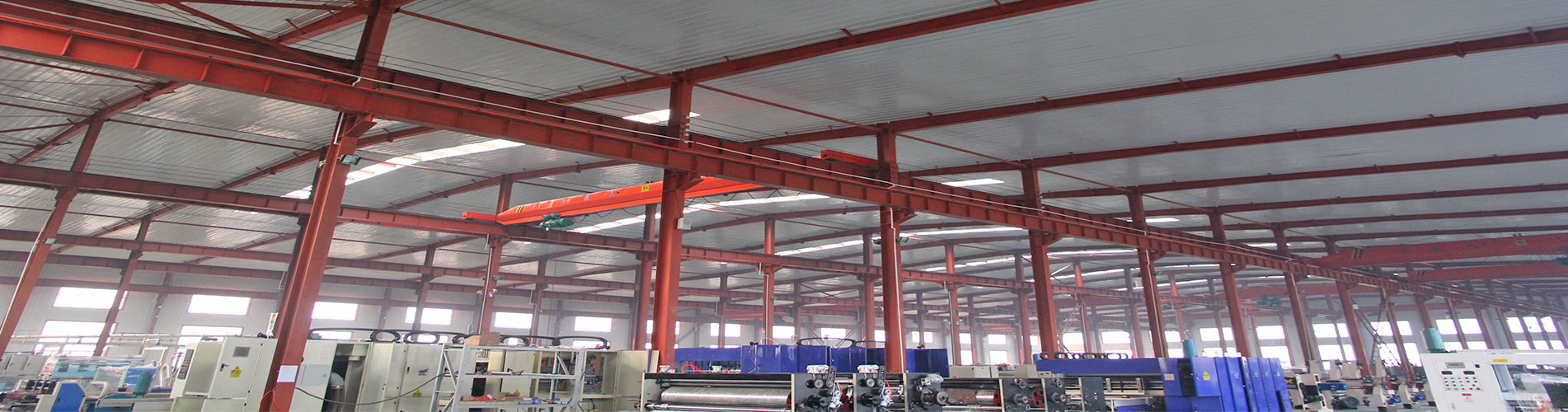

Why Steel Structure Buildings Are Suitable for Multiple Purposes
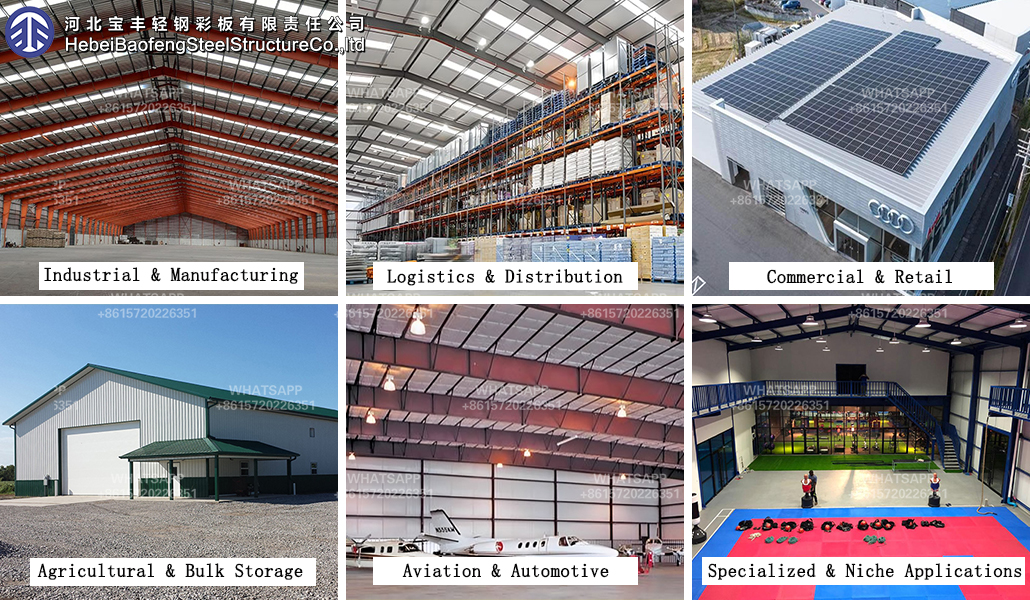
Steel structure buildings are widely used across various sectors—including industrial plants, high-rise offices, stadiums, bridges, logistics warehouses, and even residential housing—thanks to a unique combination of advantages that align perfectly with modern construction demands. Below is a breakdown of the key reasons:
1. Superior Material Properties: The Foundation for Versatility
High Strength-to-Weight Ratio: Steel offers exceptional strength while being relatively lightweight. Under the same load-bearing requirements, steel components have smaller cross-sections and lower self-weight. This enables steel structures to achieve both large spans and high-rise heights while imposing less demand on foundations—making them suitable for everything from low-rise warehouses to supertall landmarks.
Excellent Ductility and Toughness: Steel can undergo significant plastic deformation before failure, rather than fracturing suddenly. This gives steel buildings outstanding seismic and wind resistance, making them ideal for earthquake-prone areas or public buildings with stringent safety requirements.
Uniform Quality and High Reliability: Compared to concrete, steel has a more homogeneous internal structure. Its mechanical behavior closely matches design models, enabling precise engineering and consistent quality control.
2. Strong Spatial and Aesthetic Adaptability
Large Spans and Open Spaces: Thanks to their high strength and compact sections, steel members—combined with trusses, space frames, or suspension systems—can easily span dozens or even hundreds of meters without columns. This makes them perfect for stadiums, exhibition halls, airport terminals, and industrial facilities.
Architectural Freedom: Steel can be cold-formed, hot-bent, or welded into complex shapes, enabling curved surfaces, cantilevers, perforated façades, and other expressive forms. This satisfies the aesthetic ambitions of cultural landmarks and commercial complexes.
Flexible Layouts and Future Adaptability: In steel frame buildings, walls are typically non-load-bearing partitions. Interior spaces can be freely reconfigured, and future renovations, expansions, or functional conversions are relatively straightforward.
3. High Degree of Industrialization: Fast and Sustainable Construction
Factory Prefabrication, On-Site Assembly: Components are produced in standardized factories and assembled on-site using bolts or welding. This speeds up construction, reduces weather dependency, and shortens project timelines—ideal for logistics centers or temporary exhibition halls that require rapid delivery.
Green and Sustainable:
Recyclability: Steel is 100% recyclable, generating no construction waste and supporting a circular economy.
Dry Construction: Minimizes dust and wastewater pollution associated with on-site wet trades.
Material and Energy Efficiency: Smaller member sections increase usable floor area; proper insulation design reduces operational energy consumption.
4. Strong Comprehensive Economic Benefits
Lower Foundation Costs: The light self-weight reduces foundation treatment expenses.
Greater Usable Area: Thinner walls can increase effective floor space by 5%–8% compared to concrete structures.
Lower Life-Cycle Costs: Although steel may have a higher unit price than concrete, faster construction accelerates capital recovery, maintenance is simpler, service life is longer, and overall economics are often superior.
High Residual Value: At the end of a building’s life, steel scrap retains significant value.
Summary
Steel structure buildings owe their wide applicability to superior material performance, strong spatial adaptability, a high degree of industrialization, green sustainability, and solid overall economics. These strengths allow steel to flexibly meet the functional demands of buildings ranging from industrial to residential, low-rise to supertall, and permanent to temporary. With the advancement of prefabricated construction, BIM technology, and green building standards, steel structures are poised to play an even greater role in the future of the built environment.
Categorías
último blog
Etiquetas


Para Consultas sobre nuestros productos o su lista de precios, por favor, déjanos a nosotros y estaremos en contacto dentro de las 24 horas.
© Derechos de autor: 2026 Hebei Baofeng Steel Structure CO.,LTD Reservados todos los derechos.

IPv6 red apoyada


 +8615720226351